
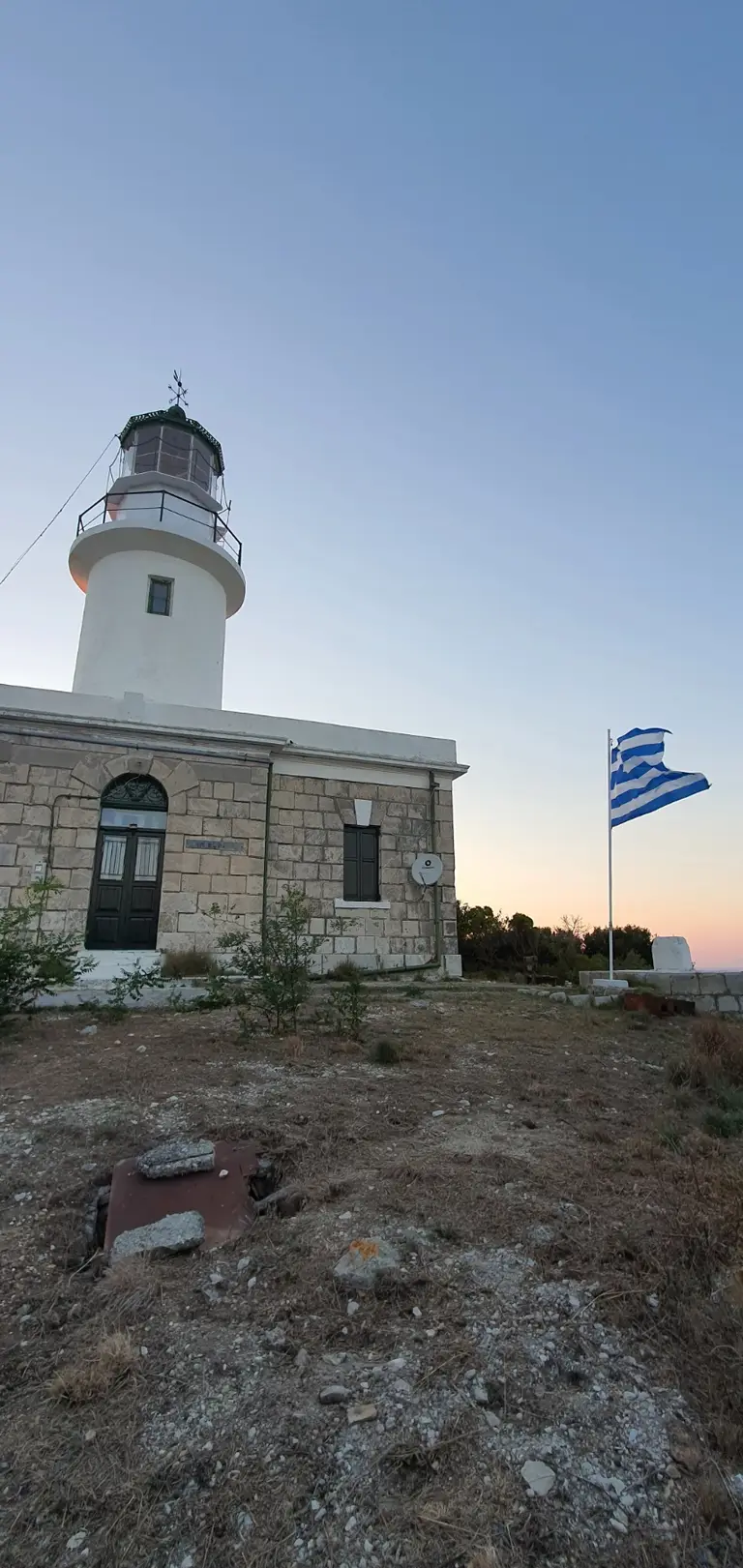
The lighthouse of Othoni is the most recognizable landmark of the island and the northwesternmost lighthouse of Greece. It is located at Cape Kastri, about 550 meters from the ruins of a Venetian fortress, on the eastern side of the island.
It first began operating in 1872 using petroleum fuel. In 1938, its lighting system was upgraded. During World War II, in 1941, the lighthouse was severely damaged by German bombing and remained inactive for several years. It resumed operation in 1945 with an automatic system (Dalen system).
In 1954, the tower and its supporting buildings were reconstructed, and new lighting equipment was installed. In 1984, the lighthouse took its current form, was electrified, and the old petrol system was replaced with modern automatic mechanisms. Today, it remains the only manned lighthouse in the Ionian Sea.
For sailors entering the Ionian Sea from the north, this is the first lighthouse they encounter. The stone tower stands 10 meters tall, with the lighthouse keeper’s residence located just below it. Every 10 seconds, it emits a bright white light visible from up to 21 nautical miles.
Although the lighthouse officially began operating in 1872, the island’s connection with light goes much further back. Medieval maps from around 1300 refer to the island as “Fano,” a name closely linked to the word for lantern or beacon. While there is no confirmed evidence of a constructed lighthouse before the 19th century, the name suggests that Othoni was already known as a natural guiding point for sailors entering the Ionian Sea.
Even today, the historical name “Fano” reflects the island’s long-standing role as a point of light in the Ionian — a role that continues with the lighthouse, still standing at the western edge of Greece.
The interior of the lighthouse is not generally open to visitors. However, each year on International Lighthouse Day, it opens to the public, offering a rare opportunity to explore inside. Visitors who wish to arrange a visit at another time can contact the Hellenic Navy Lighthouse Service through their official website to request permission and receive further information on the required process.
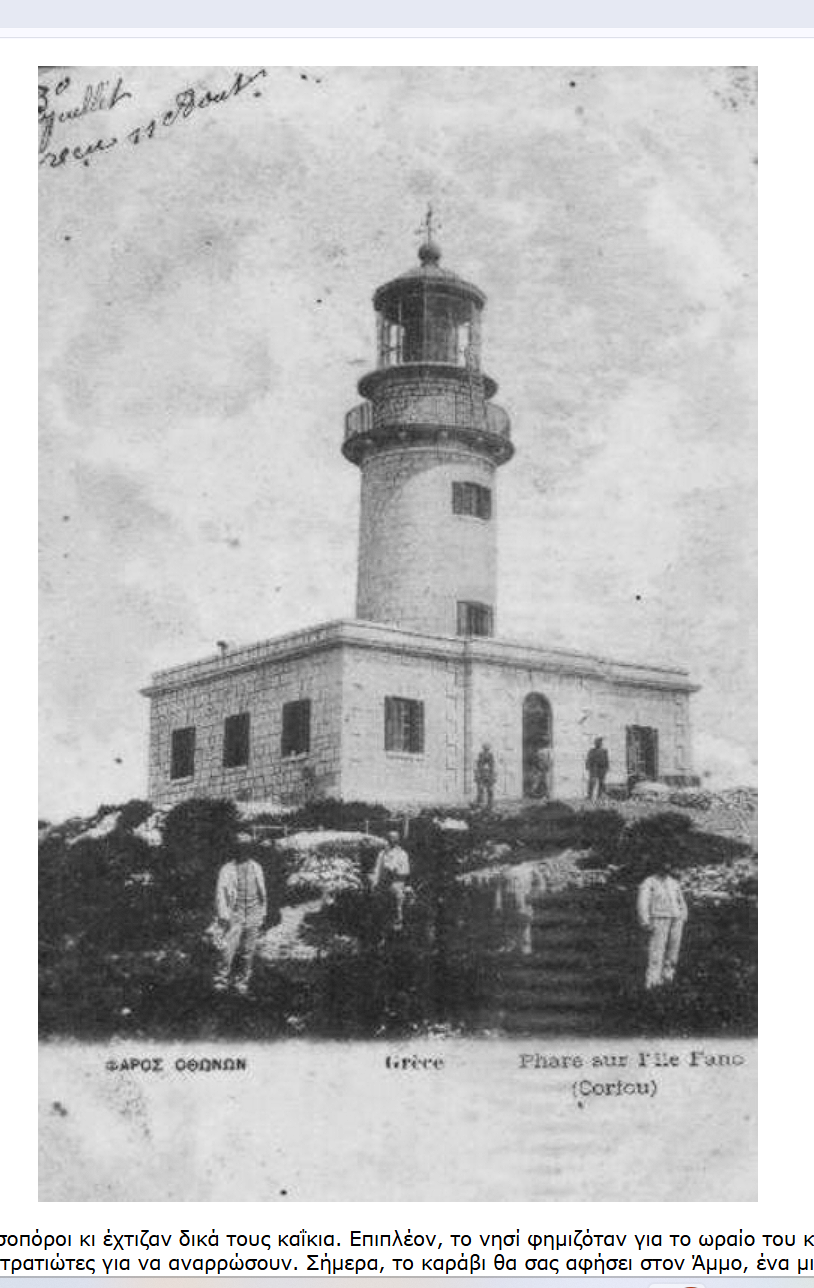
The Life of the Lighthouse Keeper in Othoni
For many years, the lighthouse was not just a structure, but a place of life and duty.
We had the opportunity to speak with the 92-year-old , Mr. Sokratis Misthos who once worked there. He first arrived on the island in 1960. Through his memories, the lighthouse becomes something more than a landmark- it becomes part of everyday life on the island.
First impressions of the island
“While we were coming by caique, the man operating the boat said to me:
‘Do you see down there?’I asked him:
‘What is down there?’He said:
‘That’s the lighthouse. That’s where you’ll be going.’I lost my mind! It was far away, deep inside the woods.
I arrived in Othoni and left my things at the police station. There was nothing there back then. Just two small shops. No roads, only a few paths. A complete mess.
I went up to the lighthouse and told the supervisor that I would be traveling back and forth to Corfu.
And honestly, that’s exactly what I did.”
Love and marriage in Othoni
During his years on the island, Mr. Sokratis also met his future wife, Mrs. Eleni.
“When I returned to the island, I met Sotiris, who was also a lighthouse keeper.
He told me:
‘Sokratis, it seems to me you’re looking for women around here. Things don’t work like that here. If you truly want to find a good girl to marry, this is the girl.’Eleni was only 17 at the time, and I was 27.
I asked him to discreetly find out whether her family would agree. But instead, he went and told them directly!
My father-in-law loved lighthouse keepers because his own father had also been one.
He came to find me himself in Ammos and said:
‘Why didn’t you come to me directly? But first, I’d like us to go to town and get to know each other.’I replied:
‘Let’s go now.’We left together for Corfu, and there we arranged the marriage.”
The hardships of lighthouse service
Before returning to Othoni, Mr. Sokratis had served in remote lighthouses in the Aegean islands and on the island of Nisyros.
Life as a lighthouse keeper during that period was strict and disciplined, with constant transfers, military-style rules, and difficult living conditions.
“It was like serving in the Navy. Uniforms, discipline, duty... everything.”
In one of his stories, he recalls how misunderstandings, reports, and punishments repeatedly led to transfers to isolated lighthouses.
Despite the hardships, he remained in service and eventually returned to Othoni as the head keeper of the lighthouse.
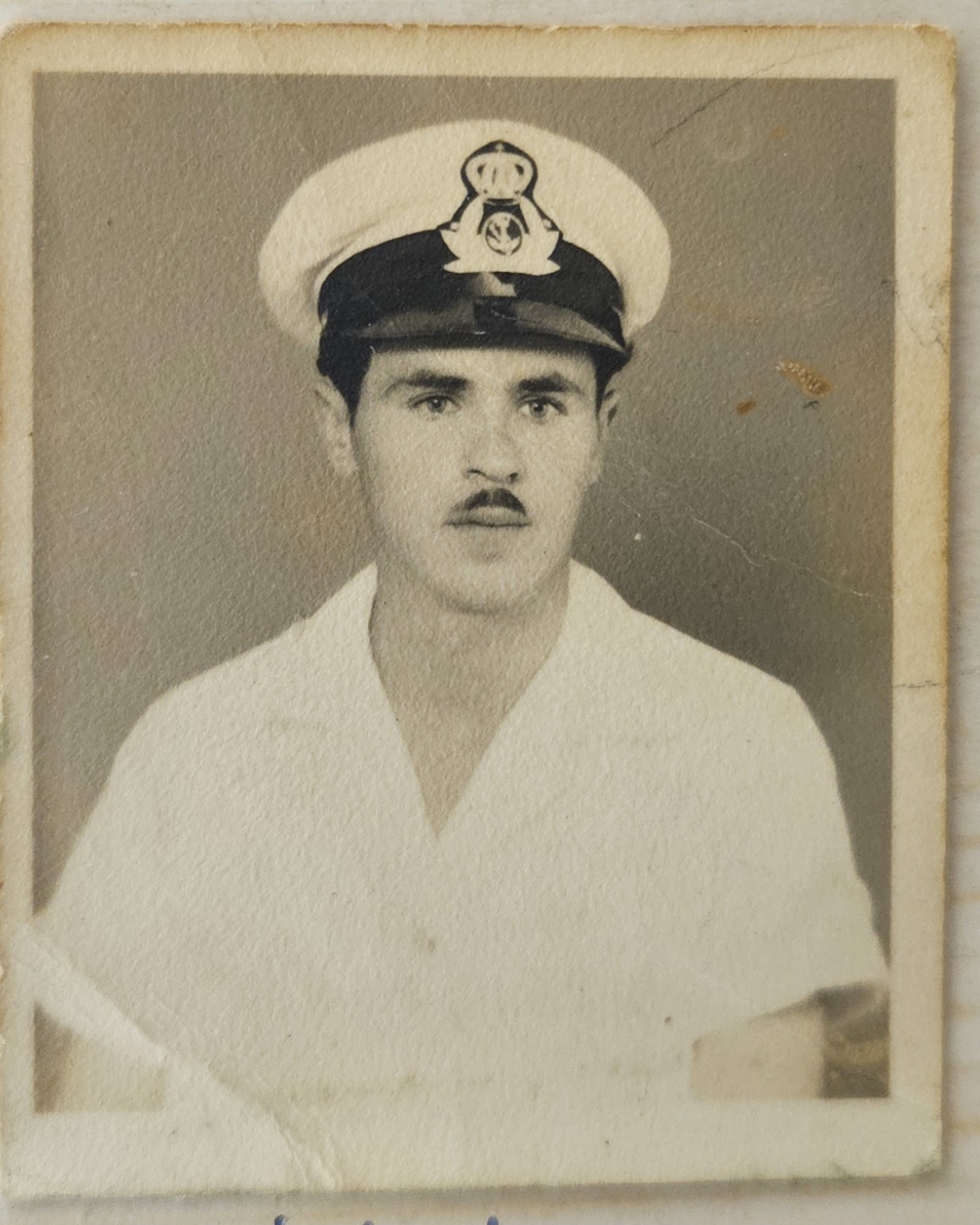
Life at the lighthouse of Othoni
“That year there were six of us living at the lighthouse.
Sotiris used to tell me:
‘Sokratis, I hope you’re not becoming an old man already and avoiding the lighthouse.’Because many supervisors preferred sitting in the cafés instead of going up there.
But I always went. I chased everyone away! Even Sotiris, who would leave to go fishing. Though he always brought back fish, and we ate very well.
We were all very close to one another.”
The lighthouse was not only a workplace, but also part of everyday life.
“After I got engaged, I would spend the nights at the lighthouse.
It had everything inside. A kitchen, beds, supplies. It was a beautiful place to live.”
Mr. Sokratis served in Othoni for nearly twenty years, while also spending periods of service in Lefkada, Spetses, and Nisyros.
How the old lighthouse worked
Mr. Sokratis vividly describes how the lighthouse operated before electricity reached the island.
“Back then, the lighthouse worked with petroleum.
There was a large basin filled with mercury, and the whole optical mechanism floated on top of it.
The lamp was extremely delicate. You had to watch it constantly. Even a single fly passing through could damage it and make it go out.
To rotate the light, there was a mechanism with heavy weights and steel cables.
It also had special lenses and prisms that concentrated the light and projected it far into the sea.
It was a remarkable piece of engineering.”
Retirement and memories
Mr. Sokratis retired at only 48 years old.
“Do you know how many years I’ve been retired? Forty-four! A whole lifetime.”
Even today, decades later, he still remembers the life of the lighthouse keepers and the history of the lighthouses in great detail.
“I have even spoken at the university about lighthouses and their history. Sotiris was really happy!”
Voices from the Lighthouse
Mr. Sotiris Politis, who also served as a lighthouse keeper, shared the same life and experiences. The two men were friends, connected by a profession that required patience, discipline, and quiet strength.
Today, their voices and memories preserve a world that has almost disappeared.
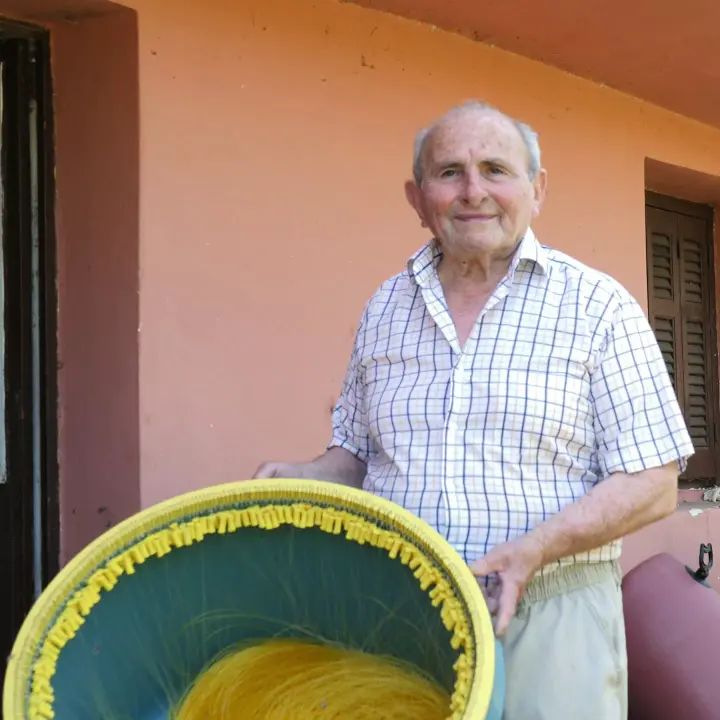
We would like to thank Istorima and Maria Μakri for recording and preserving this interview, making it possible to share this part of the island’s history. You can listen to Mr Sotiris recorded interview here:
- https://www.istorima.org/podcasts/171/mia-zoi-ston-faro-ton-othonon
- https://www.youtube.com/watch?v=EttteMDc1Bw
- https://open.spotify.com/episode/5KFuLnpDiCaLzMVaokzXQ3
At the western edge of Greece, the lighthouse of Othoni continues to stand as both a beacon for sailors and a reminder of the people who dedicated their lives to keeping its light alive.